

BLOG: NEWS, RECIPES AND ARTICLES
Testing to Evaluate Your Heart Health
Heart disease is still the #1 killer of women in the United States. Unfortunately, women’s cardiovascular health is under-evaluated and under-treated. So often evaluations only look at standard lipid panels that provide limited pictures of health. However, there are a variety of tests that can help us better understand metabolic risks and intervene earlier to reduce disease.

Heart disease is still the #1 killer of women in the United States. Unfortunately, women’s cardiovascular health is under-evaluated and under-treated. So often evaluations only look at standard lipid panels that provide limited pictures of health. However, there are a variety of tests that can help us better understand metabolic risks and intervene earlier to reduce disease.
Testing to Evaluate Your Heart Health
1. Advanced lipid panels. Beyond knowing your total cholesterol, HDL and LDL, advanced lipid panels can provide details to assess risk with markers including:
ApoB- This marker measures the total number of atherogenic LDL particles and is one of the strongest predictors of cardiovascular risk.
LDL-P- Low-Density Lipoprotein Particle number measures the concentration and size of actual LDL particles in your blood with higher numbers indicating more particles available to enter artery walls and form plaque.
Lp(a)- A genetically determined type of LDL cholesterol that when elevated significantly increases the risk of heart attack, stroke, and aortic valve disease.
2. Inflammation and metabolic markers. Heart disease is driven in part by inflammation and poor glycemic control. Biomarkers like fasting insulin, A1c, fasting glucose and hs-crp help assess your inflammation and metabolic health.
3. Coronary Calcium Score. A coronary artery calcium (CAC) heart scan measures calcium in the plaque of your heart vessels. It is a useful test when we need additional information to assess heart health that cannot be provided by labs alone.
Who Benefits from Advanced Testing?
All women can benefit from an advanced test, however I strongly encourage women with certain metabolic risk factors below to consider advanced labs:
In perimenopause or menopause
Have a family history of early heart disease
Had gestational diabetes
Have autoimmune disease
Struggle with sleep or chronic stress
Have central weight gain despite healthy habits
Are on hormone therapy and want objective monitoring
Having this additional information about your cardiovascular risks allows us to adjust your diet, optimize your exercise routine, and use medications and supplements strategically.
Let’s take care of your heart together.
6 side dishes for lower blood pressure and improved cardiovascular health
This February marks the 59th annual American Heart Month. This long tradition helps educate people about cardiovascular disease and promotes longer, healthier lives. Despite this wonderful tradition and progress, heart disease remains the single largest health threat to Americans. This month I invite you to learn more about this amazing organ system and then give it some extra TLC with common ingredients from your kitchen.
This February marks the 59th annual American Heart Month. This long tradition helps educate people about cardiovascular disease and promotes longer, healthier lives. Despite this wonderful tradition and progress, heart disease remains the single largest health threat to Americans. This month I invite you to learn more about this amazing organ system and then give it some extra TLC with common ingredients from your kitchen.
What is the endothelium?
From a big picture perspective, our cardiovascular system is composed of our heart and a complex system of vessels. At a microscopic level, these vessels are lined with a thin layer of specialized tissues called endothelial cells. This cell layer acts as the interface between the blood and underlying vascular tissue. Endothelial cells respond to moment-to-moment changes in blood flow and blood pressure. They produce factors like nitric oxide that help the vessel wall vasodilate for increased blood flow. Healthy endothelial function and blood flow are associated with improved vascular health, improved wound healing, healthy inflammation balance and better sport and lifestyle performance. Taking care of our heart includes supporting this delicate and vital tissue.
Nitric oxide (NO), an essential ingredient for healthy endothelium

Nitric oxide (NO) is a molecule that’s produced naturally by your body in the endothelium. Its function is to signal the inner muscles of the blood vessels to relax. This relaxation, or vasodilation, allows blood, nutrients and oxygen to travel to every part of your body and helps control our blood pressure. Nitric oxide levels in the body can be compromised by nutritional deficiencies, smoking, elevated blood sugar, a sedentary lifestyle and advancing age among other factors. Nitric oxide production is dependent on a sufficient supply of nutrients including the amino acid arginine and key micronutrients like folate, vitamin C, and magnesium from the diet. Switching up your diet is one of the best and most effective ways to naturally boost levels of this important molecule.
6 side dishes to Boost Nitric Oxide Levels
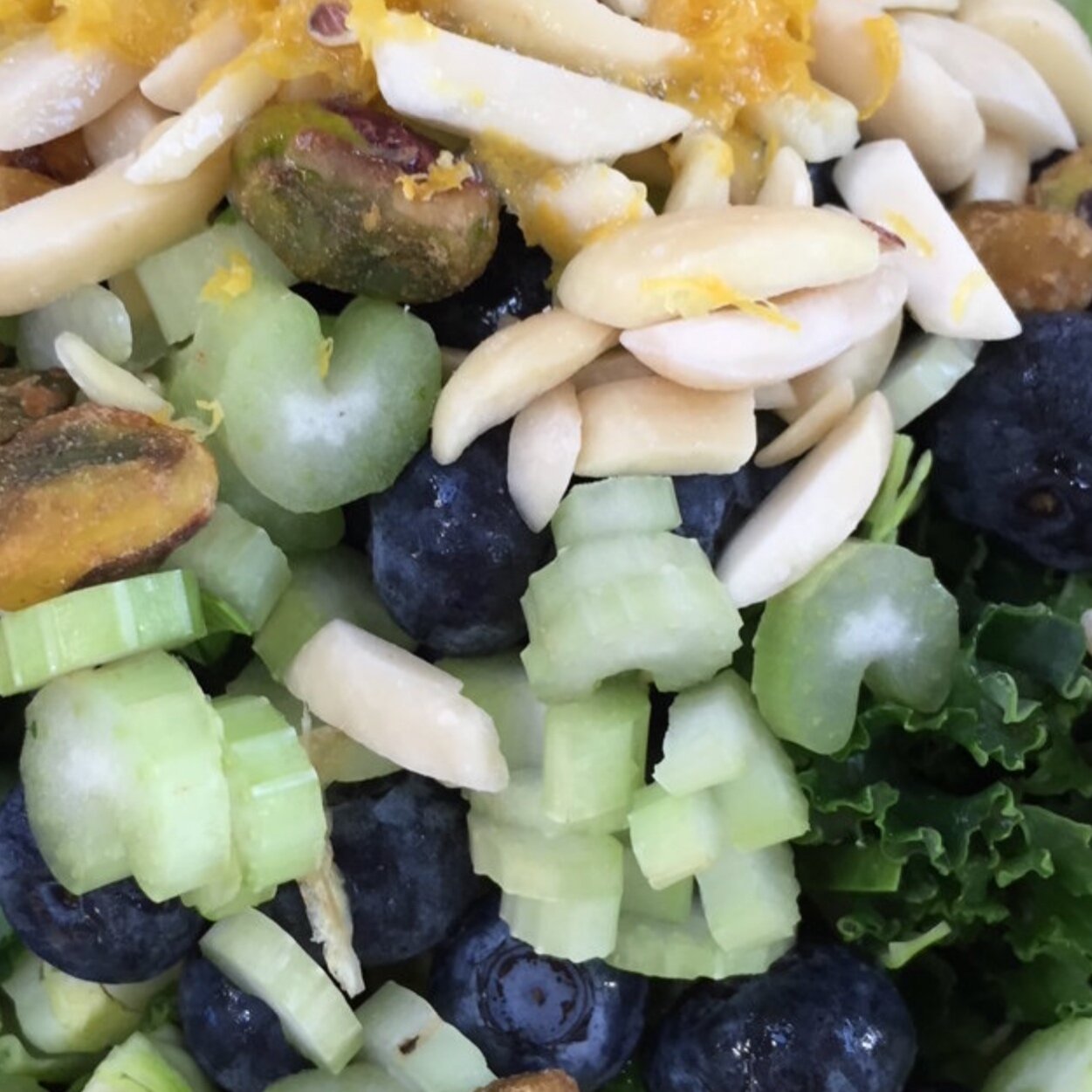
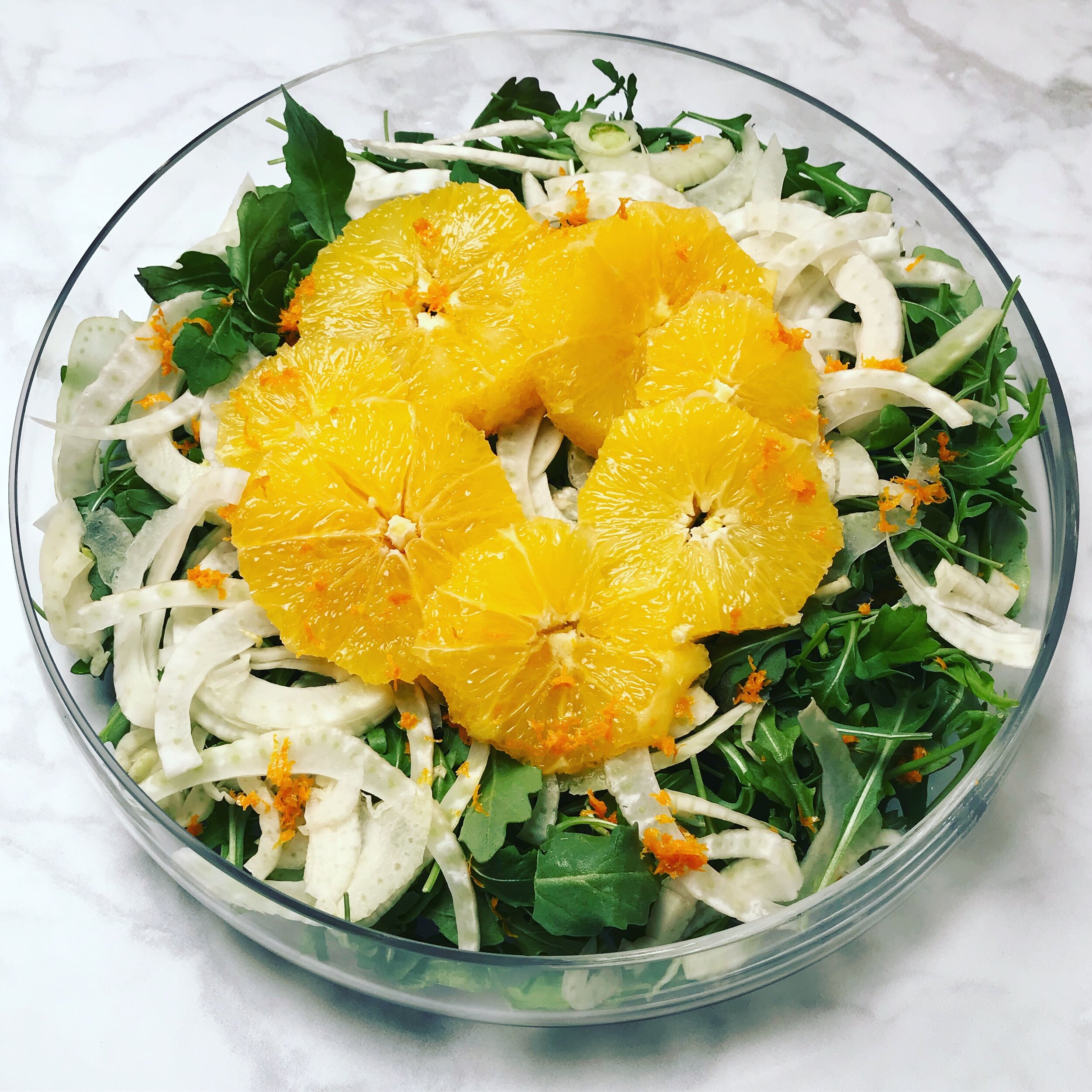
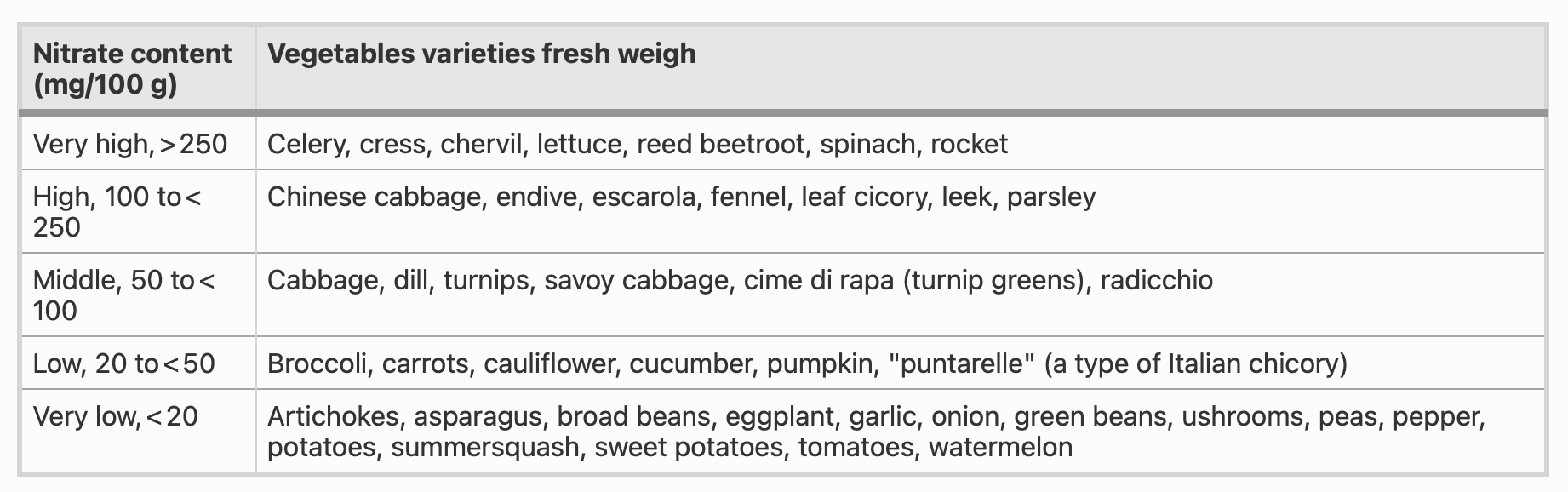
Beets and greens in particular are rich in dietary nitrates, which your body can convert to nitric oxide. Several studies have shown that beet consumption can improve nitric oxide levels and blood pressure control. Greens like spinach, arugula, kale, and cabbage are also packed with nitrates which are converted to nitric oxide in the body. Greens come with the added benefit of folate and antioxidants. These are some favorite side dishes at my dinner table:



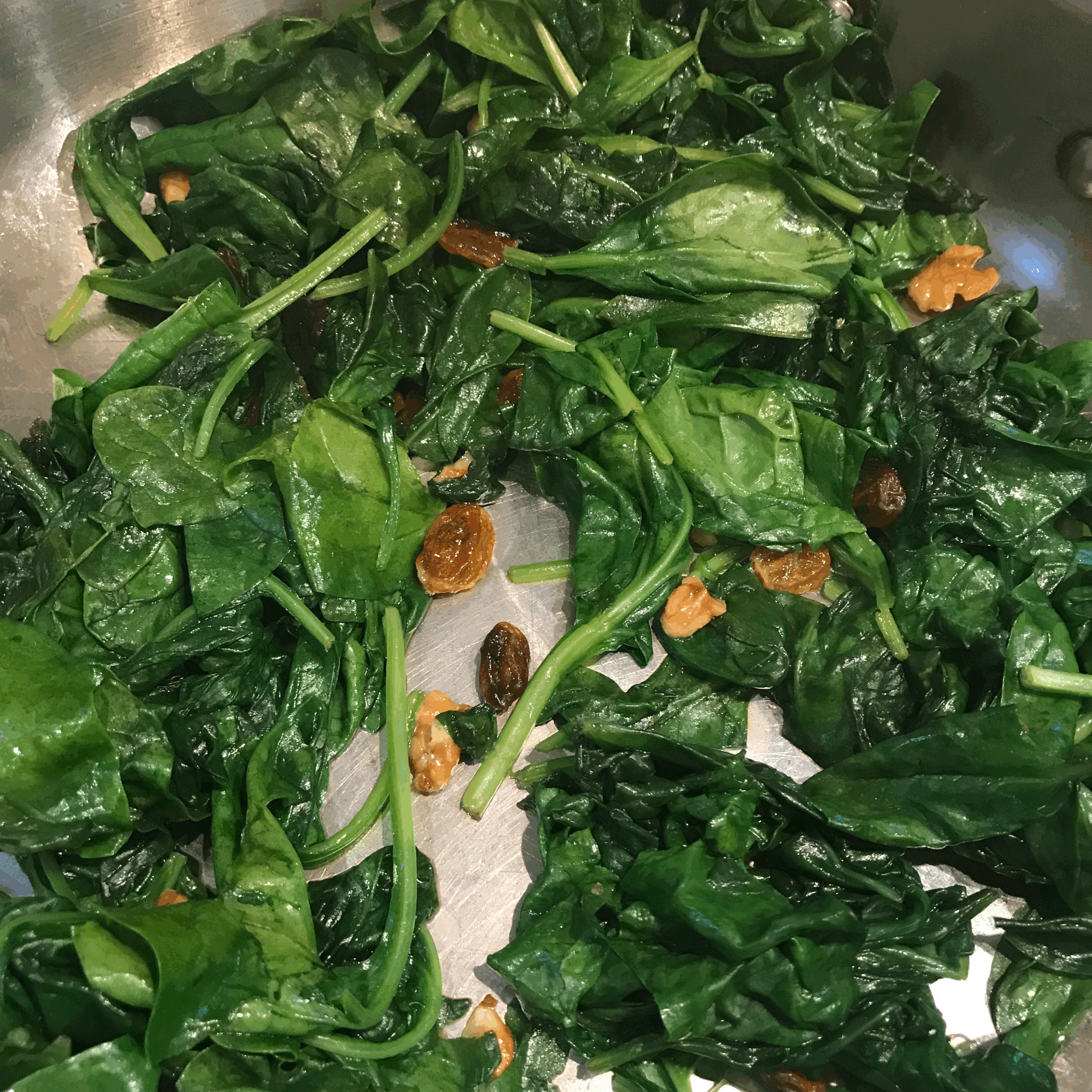
Sautéed Spinach with Pinenuts and Raisins
6 side dishes for lower blood pressure and improved cardiovascular health
This February marks the 57th annual American Heart Month. This long tradition helps educate people about cardiovascular disease and promotes longer, healthier lives. Despite this wonderful tradition and progress, heart disease remains the single largest health threat to Americans. This month I invite you to learn more about this amazing organ system and then give it some extra TLC with common ingredients from your kitchen.
This February marks the 57th annual American Heart Month. This long tradition helps educate people about cardiovascular disease and promotes longer, healthier lives. Despite this wonderful tradition and progress, heart disease remains the single largest health threat to Americans. This month I invite you to learn more about this amazing organ system and then give it some extra TLC with common ingredients from your kitchen.
What is the endothelium?
From a big picture perspective, our cardiovascular system is composed of our heart and a complex system of vessels. At a microscopic level, these vessels are lined with a thin layer of specialized tissues called endothelial cells. This cell layer acts as the interface between the blood and underlying vascular tissue. Endothelial cells respond to moment-to-moment changes in blood flow and blood pressure. They produce factors like nitric oxide that help the vessel wall vasodilate for increased blood flow. Healthy endothelial function and blood flow are associated with improved vascular health, improved wound healing, healthy inflammation balance and better sport and lifestyle performance. Taking care of our heart includes supporting this delicate and vital tissue.
Nitric oxide (NO), an essential ingredient for healthy endothelium
Nitric oxide (NO) is a molecule that’s produced naturally by your body in the endothelium. Its function is to signal the inner muscles of the blood vessels to relax. This relaxation, or vasodilation, allows blood, nutrients and oxygen to travel to every part of your body and helps control our blood pressure. Nitric oxide levels in the body can be compromised by nutritional deficiencies, smoking, elevated blood sugar, a sedentary lifestyle and advancing age among other factors. Nitric oxide production is dependent on a sufficient supply of nutrients including the amino acid arginine and key micronutrients like folate, vitamin C, and magnesium from the diet. Switching up your diet is one of the best and most effective ways to naturally boost levels of this important molecule.
6 side dishes to Boost Nitric Oxide Levels
Beets and greens in particular are rich in dietary nitrates, which your body can convert to nitric oxide. Several studies have shown that beet consumption can improve nitric oxide levels and blood pressure control. Greens like spinach, arugula, kale, and cabbage are also packed with nitrates which are converted to nitric oxide in the body. Greens come with the added benefit of folate and antioxidants. These are some favorite side dishes at my dinner table:
Sautéed Spinach with Pinenuts and Raisins
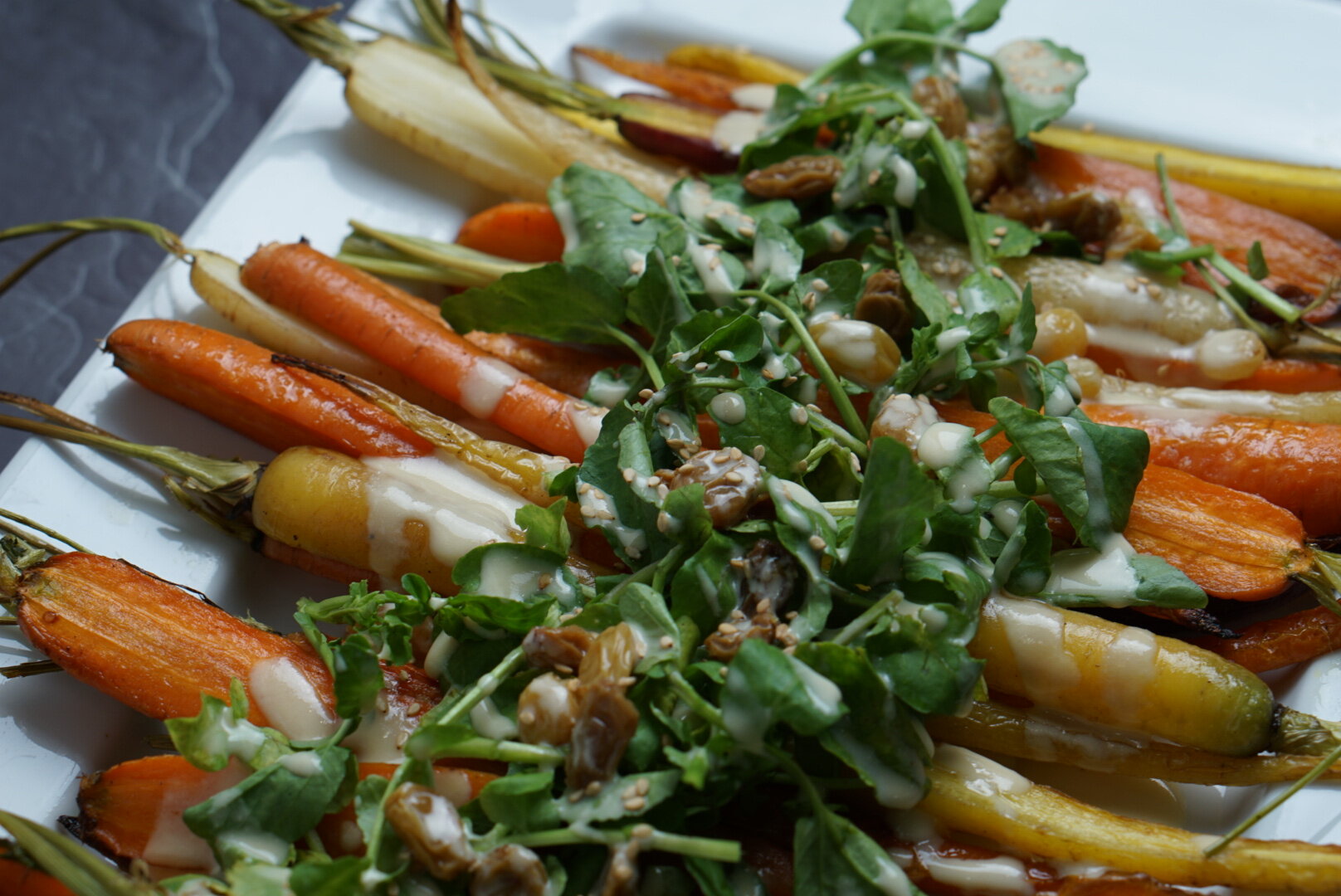
Roasted Carrots Salad with Orange Tahini Dressing
Slightly sweet and very versatile, carrots are one of America’s most popular veggies. Roasting carrots enhances the sweetness of the root and may also increase the amount of cancer fighting beta-carotene. Tahini is a paste made of mineral-rich sesame seeds. Its nutty flavor is a rich contrast to the carrots.
Slightly sweet and very versatile, carrots are one of America’s most popular veggies. Roasting carrots enhances the sweetness of the root and may also increase the amount of cancer fighting beta-carotene. Tahini is a paste made of mineral-rich sesame seeds. Its nutty flavor is a rich contrast to the carrots.
Roasted Carrots Salad with Orange Tahini Dressing
Author: Erica Leazenby, MD
Servings: 4
Time: 30 minutes
Orange Tahini Dressing:
2 Tbsp tahini
2 Tbsp orange juice
2 Tbsp apple cider vinegar
2 Tbsp olive oil
Pinch salt
Optional: 1/8 tsp orange blossom water
Pickled Raisins: (prepare in advance)
1⁄2 cup golden raisins
1⁄4 cup Champaigne vinegar
1/3 cup water
Pinch salt
Ingredients:
Salad:
3 lbs carrots of any color, scrubbed & sliced in half lengthwise
2-3 Tbsp olive oil
Generous pinch of Salt
1 bunch watercress, tough stems removed or arugula
1⁄4 cup golden raisin (pickled if desired)
Salt and pepper to taste
Orange tahini dressing
Directions:
To prepare the pickled raisins: Place raisins in a small, sealable jar and add the vinegar, water, and salt. Store the raisin in the refrigerator for up to several weeks.
To roast the carrots: Preheat the oven to 375 degrees. Toss the carrots with the olive oil and a generous pinch of salt. Lay the carrots in a single layer on a parchment lined baking sheet. Roast the carrots until easily pierced with a fork (about 25 min. depending on the size of the carrots). Remove from the oven and allow to cool.
To prepare the dressing: While the carrots are roasting, combine all the ingredients for the dressing in a small bowl and mix until smooth. Set aside.
Just before serving, toss the watercress, carrots, raisins and dressings to combine. Serve warm or at room temperature.