

BLOG: NEWS, RECIPES AND ARTICLES
Protecting Your Health with Shift to Online Care
Due to the challenges presented by COVID-19, the new coronavirus, I want to let you know about some modifications to how Relish Health will be operating through the end of March. Know that as a patient of Relish Health, I am here for you. I am doing my best to stay on top of information from the CDC, WHO, and our Federal and State Government.
Slowing the spread of virus is one of the most important things we can do to protect the health of our loved ones and ensure our health system is able to support those in most need. This means limiting non-essential travel, practicing social distancing and limiting gatherings. This concept is called “flattening the curve.” There’s a great article from The Washington Post which you can read here.
In an effort to support you and the community, Relish Health is implementing the following steps effective today:

Due to the challenges presented by COVID-19, the new coronavirus, I want to let you know about some modifications to how Relish Health will be operating through the end of May. Know that as a patient of Relish Health, I am here for you. I am doing my best to stay on top of information from the CDC, WHO, and our Federal and State Government.
Slowing the spread of virus is one of the most important things we can do to protect the health of our loved ones and ensure our health system is able to support those in most need. This means limiting non-essential travel, practicing social distancing and limiting gatherings. This concept is called “flattening the curve.” There’s a great article from The Washington Post which you can read here.
In an effort to support you and the community, Relish Health is implementing the following steps effective today:
Through the end of May, all follow-up appointments will be conducted as virtual visits. This will minimize your need to travel and limit the number of your potential viral exposures while moving about. Prior to your visit you will receive an email confirmation with your HIPPA-compliant, secure link and instructions. Please confirm your receipt of that notification through the portal.
If you are a new patient to Relish Health your appointment will still be conducted in-person at the office. Please know Relish Health is implementing CDC-recommended precautions for screening and hygiene. Please contact the office if you would prefer to delay your appointment for a later time or conduct your visit virtually.
I have created the opportunity for you to schedule shorter appointments, lasting 15 minutes. These are designed for acute illnesses as an alternative for you instead of visiting local urgent care facilities or your primary care provider. My goal is to minimize your need for travel and reduce your exposure to potentially crowded facilities. I have nearly a decade of urgent care experience to help support you in this season. These will be offered virtually through the HIPPA compliant, secure link on the portal. You may also contact me through the portal to inquire about an in-person visit, which will be considered on a case-by-case basis.
Please be aware that Relish Health does not have COVID-19 test kits nor will it be designated as a testing facility in the future.
I will be continuing to monitor the situations and will continue to bring you the most comprehensive care and guidance available. We are in this together.
Warmly,
Erica Leazenby, MD
Is it COVID-19 or a Cold?
What is known about the novel coronavirus (COVID-19) is evolving daily. There are still many unknowns about the actual number infected and the best public health measures to slow population progression. A common concern for the public is the reported similarities of COVID-19 symptoms to a seasonal cold or influenza, other viruses that are still circulating in the community. Based on symptoms alone it can be difficult to differentiate what virus is causing a patient’s symptoms. Here’s how the illnesses differ and what to do if you have symptoms.

What is known about the novel coronavirus (COVID-19) is evolving daily. There are still many unknowns about the actual number infected and the best public health measures to slow population progression. A common concern for the public is the reported similarities of COVID-19 symptoms to a seasonal cold or influenza, other viruses that are still circulating in the community. Based on symptoms alone it can be difficult to differentiate what virus is causing a patient’s symptoms. Here’s how the illnesses differ and what to do if you have symptoms.
How symptoms of COVID-19 differ from the common cold or flu
Coronaviruses are not new. They are a group of RNA viruses that cause a variety of diseases in humans and other animals. Symptoms from different coronavirus strains vary. Some cause common cold symptoms while others can cause more serious respiratory infections like SARS. The specific coronavirus making headlines today is highly infectious and new (novel) to humans meaning we have much to learn about it’s potential effect on our global community.
Many viral infections have similar symptoms, ranging from fever, mucus production, body aches and cough to shortness of breath and fatigue.
Common cold
In most cases, a cold typically comes on gradually. Symptoms typically start with a sore throat and runny nose and may be followed by coughing and sneezing. Fevers are less common. Most people recover in about 7-10 days.
Seasonal flu
Symptoms of the flu differ from colds in that they often start abruptly. Influenza can include fever (over 100.5) or chills, cough, sore throat, runny or stuffy nose, muscle or body aches, headaches, and fatigue. Some people may also have vomiting or diarrhea, though this is more common in children. Influenza (flu) can cause mild to severe illness.
COVID-19
Data from a recent study of patients in China with confirmed COVID-19 showed that the most common symptoms of this illness are a fever and cough. Shortness of breath is also a hallmark symptom that may peak on days 8-9 . The same study found that a small percentage of patients also experienced nausea or vomiting and diarrhea.
Immunocompromised individuals are more at risk for developing a more severe version of COVID-19. They may not be able to mount a strong enough initial immune response and are at risk of significant inflammation and tissue damage triggered by the virus.
What to do if you’re sick
Most importantly, if you get sick with fever, cough, and congestion stay at home. It is wise to reach out to a trusted health care provider for advice on differentiating between the viruses above. If you have not had the flu shot, a doctor may prescribe an anti-viral medication if the flu is suspected. If after a few days your symptoms stabilize—meaning you continue to have cough, low-grade fever, and body aches but no noticeable shortness of breath, you should continue to stay home and rest.
Reports from hospitalized cases of COVID-19 indicate that the potential for clinical deterioration appears to peak in the second week of illness (usually after day 8-9). Patients may develop shortness of breath—a major indicator of respiratory compromise.
If your symptoms worsen, particularly if you experience shortness of breath, it is imperative that you proceed to the closest emergency room. For safety, it is important to take private transportation and call ahead to let the ER know of your condition.
How to get tested for the coronavirus?
Currently, testing for COVID-19 is being performed at state public health laboratories and The Centers for Disease Control (CDC). The CDC has broadened their guidelines for coronavirus testing so that anyone can be tested for COVID-19 if they have symptoms and a doctor’s orders.
Testing is expected to continue to become more widely available. This, however, does not mean everyone with signs of a cold should be tested for coronavirus.
The CDC is currently recommending that the following patients be tested:
Hospitalized patients who have signs and symptoms compatible with COVID-19 in order to inform decisions related to infection control.
Other symptomatic individuals such as, older adults and individuals with chronic medical conditions and/or an immunocompromised state that may put them at higher risk for poor outcomes (e.g., diabetes, heart disease, receiving immunosuppressive medications, chronic lung disease, chronic kidney disease).
Any persons including healthcare personnel, who within 14 days of symptom onset had close contact with a suspect or laboratory-confirmed COVID-19 patient, or who have a history of travel from affected geographic areas within 14 days of their symptom onset.
What if you test positive for COVID-19?
If you are sick and have been diagnosed with COVID-19 or suspected to have COVID-19 because you have been exposed to someone with COVID-19, follow the steps below to help prevent the disease from spreading to people in your home and community. Since the Seattle area faced some of the earliest cases in the United States, the Washington State Department of Health has good recommendations on their website:
Stay home except to get medical care. You should restrict activities outside your home, except for getting medical care. Do not go to work, school, or public areas. Avoid using public transportation, ride-sharing, or taxis.
Separate yourself from other people in your home. As much as possible, you should stay in a specific room and away from other people in your home. Also, you should use a separate bathroom, if available.
Call ahead before visiting your doctor. If you have a medical appointment, call the healthcare provider and tell them that you have or may have COVID-19. This will help the healthcare provider’s office take steps to keep other people from getting infected or exposed.
Wear a facemask. You should wear a facemask when you are around other people (e.g., sharing a room or vehicle) or pets and before you enter a healthcare provider’s office. If you are not able to wear a facemask (for example, because it causes trouble breathing), then people who live with you should not be in the same room with you, or they should wear a facemask if they enter your room.
Cover your coughs and sneezes. Cover your mouth and nose with a tissue when you cough or sneeze. Throw used tissues in a lined trash can; immediately wash your hands with soap and water for at least 20 seconds or clean your hands with an alcohol-based hand sanitizer that contains at least 60 to 95% alcohol, covering all surfaces of your hands and rubbing them together until they feel dry. Soap and water is preferred if hands are visibly dirty.
Avoid sharing personal household items. You should not share dishes, drinking glasses, cups, eating utensils, towels, or bedding with other people or pets in your home. After using these items, they should be washed thoroughly with soap and water.
Clean your hands often. Wash your hands often with soap and water for at least 20 seconds. If soap and water are not available, clean your hands with an alcohol-based hand sanitizer that contains at least 60% alcohol, covering all surfaces of your hands and rubbing them together until they feel dry. Soap and water is preferred if hands are visibly dirty. Avoid touching your eyes, nose, and mouth with unwashed hands.
Clean all “high-touch” surfaces every day. High touch surfaces include counters, tabletops, doorknobs, bathroom fixtures, toilets, phones, keyboards, tablets, and bedside tables. Also, clean any surfaces that may have blood, stool, or body fluids on them. Use a household cleaning spray or wipe, according to the label instructions. Labels contain instructions for safe and effective use of the cleaning product including precautions you should take when applying the product, such as wearing gloves and making sure you have good ventilation during use of the product.
Monitor your symptoms. Seek prompt medical attention if your illness is worsening (e.g., difficulty breathing). Before seeking care, call your healthcare provider and tell them that you have, or are being evaluated for, COVID-19. Put on a facemask before you enter the facility. These steps will help the healthcare provider’s office to keep other people in the office or waiting room from getting infected or exposed.
Discontinuing home isolation
From the Washington State Department of Health:
If you have tested positive for COVID-19, you should remain under home isolation precautions for 7 days OR until 72 hours after fever is gone and symptoms get better, whichever is longer.
If you have fever with cough or shortness of breath but have not been exposed to someone with COVID-19 and have not tested positive for COVID-19, you should stay home away from others until 72 hours after the fever is gone and symptoms get better.
Additional information for your household members, intimate partners, and caregivers is available here.
Dr. Leazenby has created a hand-picked list of supplements to support immunity. Review or purchase the Relish Health approved supplements through Fullscripts. Discuss all supplements with your medical provider before starting.
Milk and Health
Milk, cheese, yogurt and their many variations are big part of the standard American diet. Most of us have grown up believing dairy is an essential part of a healthy diet. Americans have been told by the U.S. Department of Agriculture (USDA) that adults or kids over 9 years old should enjoy three 8-oz servings per day of milk or equivalent portions of cheese and yogurt for calcium and reduce the risk of bone fractures. But is this really necessary or even true?
In a recently published review article, The New England Journal of Medicine summarized the research related to one of America’s favorite foods. According to research this is what we know today:

Milk, cheese, yogurt and their many variations are a big part of the standard American diet. Most of us have grown up believing dairy is an essential part of a healthy diet. Americans have been told by the U.S. Department of Agriculture (USDA) that adults or kids over 9 years old should enjoy three 8-oz servings per day of milk or equivalent portions of cheese and yogurt for calcium to reduce the risk of bone fractures. But is this really necessary or even true?
In a recently published review article, The New England Journal of Medicine summarized the research related to one of America’s favorite foods. According to research this is what we know today:
What milk does:
If breast milk is not available, cow’s milk can be an important nutrient component of infant formula.
Milk consumption while growing can increase height. The consequences of this accelerated growth is complex. Taller stature is associated with lower risks of cardiovascular disease but with higher risks of many cancers and hip fractures.
What milk does NOT do:
Dairy is NOT associated with better bone health and decreased fracture risk. Research shows that countries with the highest intakes of milk and calcium tend to have the highest rates of hip fractures. This correlation may not be causal and might be due to confounding factors, but low dairy consumption is clearly compatible with low rates of hip fracture. In fact, a study found that milk during adolescence was associated with a 9% greater risk of hip fracture later in life for men for every additional glass they consumed per day.
Dairy does NOT promote weight loss. A meta-analysis of 29 randomized trials showed no overall effects of dairy on body weight. Contrary to U.S. Department of Agriculture (USDA) advice to choose reduced-fat dairy, findings in studies showed that low-fat milk does not appear to have advantages over whole milk for weight control — and in children, available evidence suggests greater long-term weight gain with reduced-fat milk than with full-fat milk.
Dairy does NOT help blood pressure, cholesterol and cardiovascular disease. The relatively high potassium content of milk has led to the suggestion that greater milk intake may reduce blood pressure. Randomized trials of low-fat milk have shown inconsistent results with respect to reduction of blood pressure.
Risks associated with milk:
Milk contains hormones. To increase milk production, cows have been bred to produce higher levels of insulin-like growth factor I (IGF-I) and they are pregnant for most of the time they are milked, which greatly increases levels of progestins, estrogens, and other hormones in milk.
Dairy increases cancer risk such as breast cancer, prostate cancer and others because of the effects of milk consumption on human plasma IGF-I.
Milk consumption predisposes to asthma, eczema, and food allergies.
Foods may influence health both directly and indirectly through the environmental effects of their production. Greenhouse gas production, climate changes, pollution and antibiotic resistance are associated with the milk industry, particularly industrial-scale production.
Consensus:
This article concludes that the health benefits of dairy products have not been established and concerns exist about the risks of regular consumption. When we evaluate the research, it is important to note that the reported health effects of dairy depend on the foods or beverages to which they are compared. In many studies, dairy foods are better when compared to processed red meat or sugar-sweetened beverages but less beneficial when compared to plant-protein sources such as nuts. The bottom line is to enjoy dairy responsibly and in small quantities, if at all.
How to Replace Butter When Baking
Dairy Free, Egg Free Indulgent Eggnog
Homemade Coconut Yogurt
Source: https://www.nejm.org/doi/pdf/10.1056/NEJMra1903547?articleTools=true
Homemade Coconut Yogurt
Probiotics are all the rage in the wellness community. And for good reason, there is very interesting science about their effectiveness. Probiotics, however, are nothing new. Our grandparents and great-grandparents enjoyed them regularly as part of a common, non-industrialized diet. Making foods like yogurt and sauerkraut were simply tasty ways to preserve food.
I recommend getting as many nutrients as possible through food, even probiotics. Yogurt is found in nearly every grocery, but few people realize how easy it is to make at home. Often the commercially available products include sugar and stabilizers that can be avoided with this DIY approach. Not everyone tolerates cow’s milk, so I’ve written a recipe below for a coconut milk alternative that I make at home.
Enjoy!

Homemade 2-ingredient Coconut Yogurt
Probiotics are all the rage in the wellness community. And for good reason, there is very interesting science about their effectiveness. Probiotics, however, are nothing new. Our grandparents and great-grandparents enjoyed them regularly as part of a common, non-industrialized diet. Making foods like yogurt and sauerkraut were simply tasty ways to preserve food.
I recommend getting as many nutrients as possible through food, even probiotics. Yogurt is found in nearly every grocery, but few people realize how easy it is to make at home. Often the commercially available products include sugar and stabilizers that can be avoided with this DIY approach. Not everyone tolerates cow’s milk, so I’ve written a recipe below for a coconut milk alternative that I make at home.
Enjoy!
Coconut Yogurt
Ingredients:
1 can full fat coconut milk (Choose a brand without fillers or stabilizers in a BPA-free can.)
1 probiotic capsule containing lactobacillus OR ¼ cup of a prior batch of yogurt (store bought or homemade)
1 sterilized glass jar (I use a Ball jar that I first run through the dishwasher to sterilize.)
Directions:
Add the coconut milk and probiotic (or yogurt) to the clean glass jar. Stir to combine.
Loosely cover the jar with the lid and place the jar in the oven near the oven light.
Turn on the oven light and let the jar sit overnight, but do not turn the oven on. The very low heat from the lamp is all that is necessary.
In the morning stir the coconut yogurt as separation is natural. Place the yogurt in the refrigerator to firm. Stir again just before using.
Notes:
Be sure to start with clean utensils and hands.
Choose a probiotic that includes lactobacillus somewhere in the range of 10-50 billion CFU. You do not want it to contain prebiotics. I use whatever I have on hand, but these are examples: Flora Advanced Adult Formula, Renew life Ultra Flora, Jarrow probiotic.
The yogurt should have a sweet tangy smell. If it smells off or you see colored bacteria or mold on the surface, then discard it.
Low fat coconut can be used, however the consistency will be thin and pourable like kefir.
Check out these additional probiotic foods.
Should you be taking a probiotic?
(This blog post is not sponsored by any manufacturer. However, Relish Health may receive a commission on purchases made through an Amazon link.)
10 Tips for Starting a Plant-Based Diet
Have you made a resolution to make changes for a healthier 2020? I know many people kickstarted the year with a "cleanse" or a specific or restrictive diet. However, a healthier year usually takes a longer-term approach. I recommend setting goals that move your eating in the right direction in realistic and sustainable ways. My one size fits all advice is to simply eat more plants. Whether you are interested in a vegetarian or plant-based diet or simply adding more vegetables to your diet these strategies may be helpful.

Have you made a resolution to make changes for a healthier 2020? I know many people kickstarted the year with a "cleanse" or a specific or restrictive diet. However, a healthier year usually takes a longer-term approach. I recommend setting goals that move your eating in the right direction in realistic and sustainable ways. My one size fits all advice is to simply eat more plants. Whether you are interested in a vegetarian or plant-based diet or simply adding more vegetables to your diet these strategies may be helpful.
Build every meal around a star vegetable, instead of a meat or carbohydrate. How about a roasted cauliflower, veggie tagine or meaty grilled portobella mushroom with romesco sauce?
Embrace the 4S's. Soups, salads, smoothies and stir fries are great ways to add more veggies to our meals.
Use the flavor and health benefits of herbs and spices to transform meals from bland to exciting. This Moroccan lentil soup is deliciously spiced with anti-inflammatory turmeric, ginger and cinnamon.
Use different cooking techniques to bring out different flavors—for example, roasting a vegetable can bring out sweetness; grilling a vegetable can bring out the smokiness. Check out this roasting guide for perfect veggies every time.
Use a variety of textures—build an interesting and satisfying meal by layering different textures, such as crunchy nuts and seeds, chewy shiitake bacon, or silky smooth cashew cream.
Add sauce- Pesto, romesco and salsa verde are some of my favorites. They are a great way to add flavor and a few more veggies to your plate.
Make cashew cream— many people miss the creaminess associated with dairy products when they transition to a dairy-free or plant-based diet. Raw cashews, soaked and then puréed, make a great substitute for cream. Add a splash of lemon juice and a pinch of salt for a sour cream like flavor.
Caramelize or pickle onions—these make an excellent flavor addition to almost any food and keep well in the fridge for a quick way to elevate a meal.
Embrace fermented foods. Sauerkraut, coconut yogurt, kimchee and miso are few of the probiotic rich foods that are easily found in most groceries. They add a punch of flavor while benefiting your gut health.
Make your food beautiful— Embrace the wide variety of colorful fruits and veggies available at the grocery. We also eat with our eyes, so paying attention to presentation makes your food more satisfying. Fruits and vegetables are naturally beautiful.
Here’s to healthy year. Cheers!
Dairy Free, Egg free Indulgent Eggnog
Dairy-free eggnog... it’s that time of year when one of my favorite drinks is available. While you can certainly add bourbon or rum, and enjoy this classic drink by the fire; my preference is to enjoy it without the alcohol. It can be an afternoon treat, a dessert, or sometimes I add a splash in my morning coffee. Whenever I see dairy-free eggnog at my grocery I indulge because that limited time label means “buy now because you won’t see it again this season.” Last year I bought a carton before Thanksgiving and never saw it at the grocery again. In case you missed the eggnog already, I have an easy recipe below to put on repeat for the season.
Dairy-free eggnog... it’s that time of year when one of my favorite drinks is available. While you can certainly add bourbon or rum, and enjoy this classic drink by the fire; my preference is to enjoy it without the alcohol. It can be an afternoon treat, a dessert, or sometimes I add a splash in my morning coffee. Whenever I see dairy-free eggnog at my grocery I indulge because that limited time label means “buy now because you won’t see it again this season.” Last year I bought a carton before Thanksgiving and never saw it at the grocery again. In case you missed the eggnog already, I have an easy recipe below to put on repeat for the season.
Vegan Eggnog
1 13.5 oz can full-fat or lite coconut milk
13.5 oz unsweetened nut milk (I like cashew)
3 Tablespoons maple syrup or monk fruit sweetener
2 teaspoons vanilla
1 teaspoon ground nutmeg
1/4 teaspoon ground cinnamon
Pinch of salt
Bourbon or rum (optional)
Blend until smooth. Chill and enjoy

Dairy-free Eggnog
Additional information about reducing dairy in the diet:
Milk and Health: Research from the New England Journal of Medicine
How to replace butter when baking
Dairy is a delicious and nutrient-dense food, however not everyone can tolerate digesting it. Scientists estimate that 75% of the world’s population is lactose intolerant. Many other people have a sensitivity or allergy to the protein in milk and find their health is better when dairy is left out of their daily diet.
Replacing dairy milk with a nut milk and foregoing cheese are straightforward solutions to going dairy-free. However, converting a baking recipe with butter to a non-dairy alternative can be challenging. I’ve listed a few tips below to help you convert your favorite recipes with success.

How to replace butter when baking
Dairy is a delicious and nutrient-dense food, however not everyone can tolerate digesting it. Scientists estimate that 75% of the world’s population is lactose intolerant. Many other people have a sensitivity or allergy to the protein in milk and find their health is better when dairy is left out of their daily diet.
Replacing dairy milk with a nut milk and foregoing cheese are straightforward solutions to going dairy-free. However, converting a baking recipe with butter to a non-dairy alternative can be challenging. I’ve listed a few tips below to help you convert your favorite recipes with success.
Tip 1: Determine the role of butter in the recipe. Butter is comprised of 80% fat and 20% water. When used in baking, the fat provides a softer texture and rich mouth feel while the water provides steam that can help create rise and volume. Butter also has a distinct flavor and the ability to brown. In recipes like quick breads or muffins, butter can often be substituted with bananas, applesauce or pumpkin purees to provide moisture. In recipes where a light, flaky or crisp texture is desired; the fat in the recipe must be substituted in order to produce a similar finished product.
Tip 2: Choose a liquid or a solid fat for substitution. Liquid fats like olive oil and avocado oil can make lovely substitutes in some baked products, especially recipes that call for melted butter. Liquid fats cannot be creamed with sugar to aerate a batter, so they are best to use in products that are moist and dense, like quick breads. Solid fats, however, can be creamed with sugar or rubbed into flour to trap air and provide lift for light, fluffy cakes and flaky crusts. Coconut oil is a plant-based fat that is solid at room temperature, so it behaves similar to butter when baking. One caveat is that butter melts at 90°F while coconut oil melts at 76°F. Coconut oil can easily melt in a warm kitchen thereby losing its ability to aerate your baked products. Chilling the oil in the refrigerator and taking care to not overwork the batter/dough can mitigate this difference.
Tip 3: Adjust the quantity of fat. Unlike butter, coconut oil and liquid fats are 100% fat with no water content. Baked goods can feel heavy and greasy if oil is substituted 1-to-1 for butter. When substituting coconut oil for butter reduce the quantity used by 20-25%.
Tip 4: Add flavor. Olive oil, avocado oil and coconut oil each have their own subtle flavor profiles. Adding vanilla, citrus zest, cinnamon, herbs or an extra pinch of salt can enhance the flavor of the product and make up for the loss of butter flavor.
Converting recipes is a science and often requires trial and error. Don’t be afraid to experiment. I’ve had my fair share of less than perfect baked goods, but they usually always taste great. Through experimentation you will find the perfect replacement to get the light and fluffy or crispy texture you are after.
Additional information about reducing dairy in the diet:
Milk and Health: Research from the New England Journal of Medicine
Relish Health Gift Guide 2019
Happy Holidays from our home to yours! The season of gift-giving is officially here, and few things are sweeter to me than finding the perfect gifts for loved ones - gifts that make them feel known and loved. I’ve pulled together some of my favorite health-enhancing gift ideas, and hope this guide gives inspiration, relieves shopping frenzy, and enables you and your loved ones to savor the season.
Happy Holidays from our home to yours! The season of gift-giving is officially here, and few things are sweeter to me than finding the perfect gifts for loved ones - gifts that make them feel known and loved. I’ve pulled together some of my favorite health-enhancing gift ideas, and hope this guide gives inspiration, relieves shopping frenzy, and enables you and your loved ones to savor the season.

For the environmentalist:
In our family we love to give experiences. Museum memberships, annual zoo passes or my personal favorite: the annual pass to the National Park System. These passes help make memories while fostering health promoting love and connection to each other and nature.
If you are looking for something to wrap and put under the tree, consider reusable, non-toxic food storage. All of these options are perfect for a picnic at the museum or park!


For the foodie and chef in your life:
ruffage was named a Best Cookbook for Spring 2019 by The New York Times and Bon Appetit. It is a how-to cook book detailing how to cook 29 types of vegetables. Relish Health is all about promoting more veggies on the plate! “Author Abra Berens—chef, farmer, Midwesterner—shares a collection of techniques that result in new flavors, textures, and ways to enjoy all the vegetables you want to eat. From confit to caramelized and everything in between—braised, blistered, roasted and raw—the cooking methods covered here make this cookbook a go-to reference. You will never look at vegetables the same way again.”
For the health conscious reader:
Sara Gottfried, MD is a multiple New York Times bestselling author and Harvard-MIT educated women’s health expert. Her latest book, Brain Body Diet, explains the latest science on how to reconnect the brain and the body. She lays out practical strategies to address mood changes, weight loss and hormone balance. An excellent read!


For the fitness enthusiast or someone looking for more calm in their life:
Monitoring heart rate variability with a fitness tracker provides insights into managing mood and planning an optimal workout.

For your kind neighbors:
Heartfelt, homemade gifts are always in style. These granola recipes are simple and full of heart healthy goodness.
For you… a jump start on a new you in the new year:
ProLon is a fasting mimicking diet system that gives you all the benefits of a 5-day fast while enjoying food. Increased focus, fat focused weight loss, enhanced cellular renewal and improved metabolic health are well documented benefits. Use PROLON20 for a 20% discount through https://relishhealthmd.gethealthy.store or pick up at the Relish Health office.
Some gifts never go out of style. Check out the gift guide from 2018.
(This blog post is not sponsored by any manufacturer. However, at no cost to you, Relish Health may receive a commission on purchases made through an Amazon link.)
Chocolate Strawberry Granola
This granola is a major favorite of my kids. The dried strawberries add a colorful, sweet punch they love. (No colored marshmallows needed!). This recipe is a just-sweet-enough treat to enjoy with the yogurt or the milk of your choice or just as a snack.
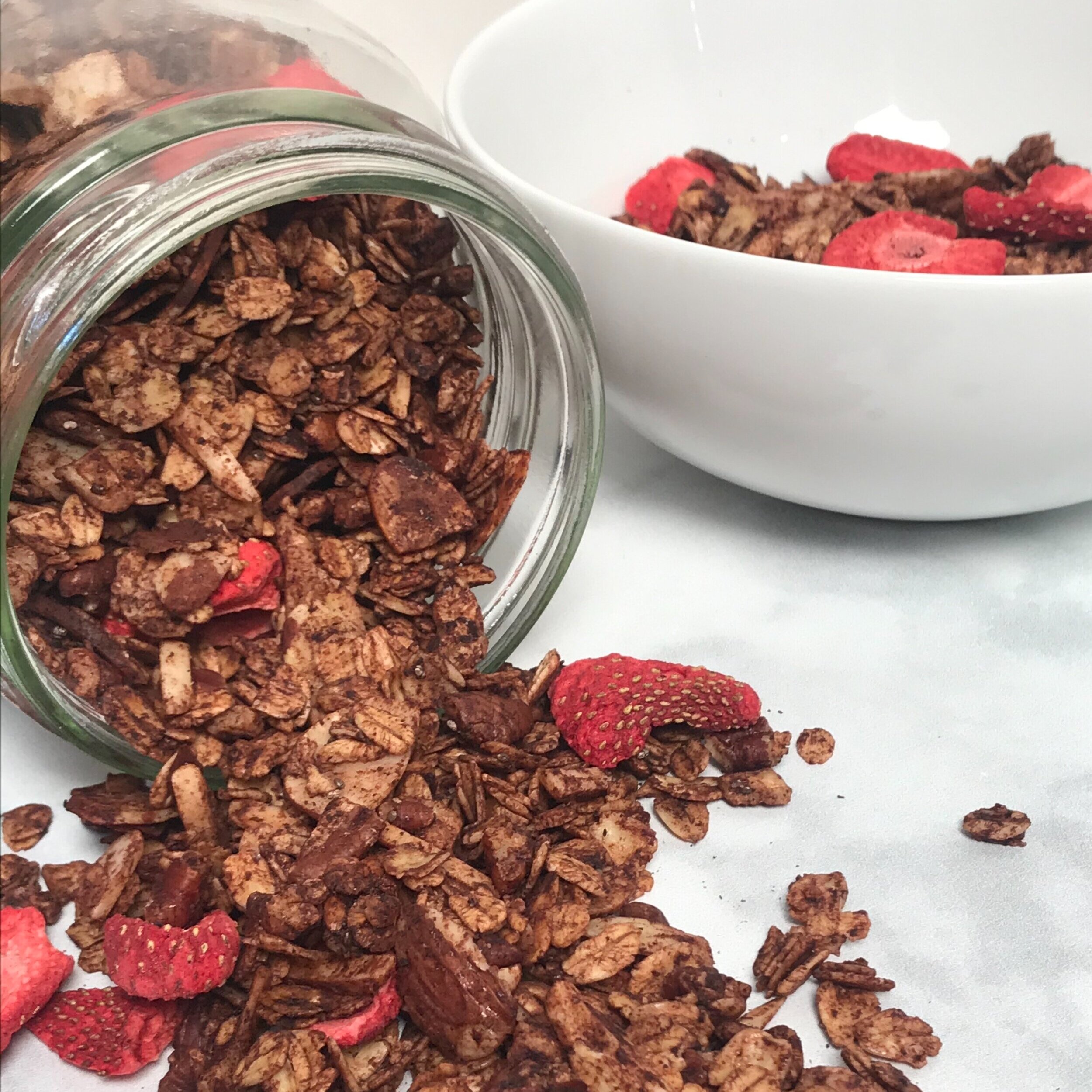
Chocolate Strawberry Granola
This granola is a major favorite of my kids. The dried strawberries add a colorful, sweet punch they love. (No colored marshmallows needed!). This recipe is a just-sweet-enough treat to enjoy with the yogurt or the milk of your choice or just as a snack.
I purchase the dried strawberries in the snack section of my grocery but they are also available online. Monk fruit sweetener helps keep the sugar content of this recipe low. It can be purchased at health food stores or online.
Author: Erica Leazenby
Time: 45 minutes
Servings: 16 (1/3cup portions)
Ingredients:
3 cups gluten free old fashioned oats
1 cup pecan pieces
½ cup sliced almonds
½ cup slivered almonds
¼ cup coconut oil, melted
¼ cup liquid monk fruit sweetener
¼ cup maple syrup
2 Tablespoons cocoa powder
1 Tablespoon chia seeds
1 Tablespoon vanilla
1 pinch sea salt
½ ounce freeze-dried strawberries
Optional: 2 Tablespoons dark chocolate chips (70% or higher)
Directions:
Preheat the oven to 325 degrees.
Combine the oats, nuts and seeds in a mixing bowl.
Combine the oil, monk fruit, maple syrup, cocoa powder, vanilla and salt in a large measuring cup or bowl. Mix well. Pour the mixture over the oat mix and stir well so that all the oats are well coated with the liquid.
Spread the mixture onto one large, or two smaller, lined baking sheets in a thin layer. Toast the granola for approximately 40 minutes stirring every 10-15 minutes. Remove the granola from the oven when the mixture is golden in color and evenly browned throughout the mixture.
Sprinkle the granola with the dark chocolate if using and let cool. Once the granola is room temperature sprinkle with the strawberries. Store the granola in an airtight container. The mix will keep for several weeks in the pantry or indefinitely in the freezer.
Looking for other granola flavors? Check out this recipe for The Ultimate Nut Lovers Granola
(This blog post is not sponsored by any manufacturer. However, Relish Health may receive a commission on purchases made through an Amazon link.)
The Power of Functional Medicine Verified
Exciting news was released in the Journal of American Medical Association—JAMA Network Open this month. The highly esteemed journal just published the first-ever retrospective cohort study of the functional medicine model from the Center for Functional Medicine at Cleveland Clinic.

Exciting news was released in the Journal of American Medical Association—JAMA Network Open this month. The highly esteemed journal just published the first-ever retrospective cohort study of the functional medicine model from the Center for Functional Medicine at Cleveland Clinic.
What is a functional medicine model? It’s not a new medical specialty, but rather a philosophy used to look at the body with a system-based approach to care. Functional medicine aims to understand how all the different parts of the body work together. It looks at a symptom as a sign of dysfunction and aims to identify the root cause of the problem rather than simply tame the symptom with medications.
The recently released cohort study demonstrated that this model of care works! In fact, patients receiving care with a functional medicine model exhibited significantly larger improvements in patient-report quality of life outcomes at 6 months compared to propensity-matched patients that received conventional medical care. The results were sustained through 12 months and were reported as less likely to decrease over time. This is exciting news documenting the power of functional medicine!
Would you like to embrace this modern model of medical care? Schedule an appointment with Relish Health to get started.
Prepare yourself for sugar season
Halloween marks the official start of sugar season. All of the candy from trick-or-treating gets us primed for the sugar feasting that often accompanies the holidays. Of course, a little sugar is a fun indulgence and makes life… sweeter, but with all of the upcoming office parties, happy hours and family feasts it is easy for our consumption to get out of hand. Understanding sugar and its impacts on your body can be a powerful tool in controlling your health, your weight, and your mood throughout the entire year.
Below is a list of suggestions that can help you minimize added sugar in your diet.

Halloween marks the official start of sugar season. All of the candy from trick-or-treating gets us primed for the sugar feasting that often accompanies the holidays. Of course, a little sugar is a fun indulgence and makes life… sweeter, but with all of the upcoming office parties, happy hours and family feasts it is easy for our consumption to get out of hand. Understanding sugar and its impacts on your body can be a powerful tool in controlling your health, your weight, and your mood throughout the entire year.
What is sugar and do we need it?
Sugar is a carbohydrate that is naturally present in most whole foods. As we eat, our body produces digestive enzymes that break down these carbohydrates into simple sugars—glucose, galactose and fructose. These simple sugars are absorbed into our bloodstream and are processed by our liver. Glucose is released back into the bloodstream to fuel our cells and body.
Sugar comes in many forms. “Natural sugars” are those that come from whole foods like fruit or dairy. “Added sugars” are those that are added during manufacturing or processing. Added sugars can be natural (honey, maple syrup, coconut sugar, etc.) or processed (cane sugar, high fructose corn syrup, etc.). Added sugars may be used to balance favors, produce caramelization, act as a preservative or extend the shelf life of products. With the variety of sugar forms and the diversity or roles it plays in food production it is easy to understand why sugar has become so prevalent in our food supply.
Regardless of the type of sugar consumed, our body eventually breaks down all sugars to the same simple forms—glucose, galactose or fructose. Natural, whole food sources of sugars are healthiest because the sugar is accompanied with fiber, water, vitamins and other nutrients that slow the absorption of sugar into our body and put less demand on our metabolism.
What is the harm in indulgence?
I believe life is meant to be celebrated with the occasional sweet treat. Unfortunately, the average American consumes almost 152 pounds of sugar in one year. That is equal to 3 pounds (or 6 cups) of sugar in one week. There is abundant medical research that shows that frequent consumption of sugar perpetuates inflammation, weight gain, fatty liver disease and increases our risk of diabetes, heart disease, dental cavities and even Alzheimer’s disease.
How much sugar is OK?
There are many public health organizations that weigh in on this issue. The America Heart Association, the CDC and the US Department of Health and Human Services among others, recommend no more than 36 grams of added sugar for men per day and no more that 24 grams for women and children over 2 years of age. For reference, one teaspoon of sugar equals 4 grams. It is easy to meet and exceed these recommendations, especially when that grande pumpkin spice latte at Starbucks clocks in at 50 grams per indulgence!
There is definitely a place for sugar in our lives but keeping sugar to a minimum in our everyday lives is a good idea. Reducing added sugar consumption can help minimize the risks of lifestyle related causes of death like obesity, heart disease and diabetes.
How do you reduce your sugar intake?
Making diet changes is no small task; and there is not necessarily one right way to do it. Below is a list of suggestions that can help you minimize added sugar in your diet.
1. Learn the many names of sugar so you can identify it when reading labels. The food industry has become very clever in disguising sugar. Familiarize yourself with the list below.
Agave Nectar
Barbados Sugar
Barley Malt
Beet Sugar
Brown Sugar
Cane Crystals
Cane Juice Crystals
Cane Juice
Caramel
Carob Syrup or Sugar
Coconut Nectar/Sugar
Concentrated Fruit Juice
Confectioner's Sugar
Corn Syrup Solids
Corn Sweetener
Crystalline Fructose
Dextrin
Diastatic Malt
Diatase
Evaporated Cane Juice
Florida Crystals
Fruit Concentrate
Glucose Solids
Golden Sugar/Syrup
Granulated Sugar
Grape Sugar
Grape Juice Concentrate
High-Fructose Corn Syrup (HFCS)
Honey
Icing/Invert Sugar
Lactose (added)
Malt Syrup
Maple Syrup
Molasses
Muscovado
Nectresse
Palm Sugar
Refiner's Syrup
Rice Syrup/Malt
Sorghum Syrup
Sugar/Raw Sugar
Table Sugar
Treacle
Turbinado Sugar
"-ol" sugars: erythritol, ethyl maltol, mannitol, sorbitol
"-ose" sugars: dextrose, D-mannose, fructose, galactose, glucose, maltose, sucrose
2. Gradually cut back on sweetened foods. Strategies like replacing sugar sweetened beverages with unsweetened tea or sparkling water, opting for fruit as a dessert or reaching for a square of dark chocolate instead of a Snickers can help move the needle when addressing our sugar consumption. Over time, our palates adapt and we may no longer appreciate the super-sweet products we once loved.
3. Or, eliminate sugars cold turkey. This method works well for some. Opting for a 7-10 days sugar elimination diet resets the palate and can dramatically reduce sugar cravings that keep us perpetually reaching for the candy jar. Be prepared: for some people days 3-5 of this challenge feel the toughest. Hang in there.
4. Eat protein at breakfast. A meal that includes protein, fat and fiber helps to balance your blood sugar and keep you fueled and focused during your day. When you are satiated, you are less like to eat the donut in the break room that may prime your sweet tooth for a day’s worth of binging.
5. Drink more water and green tea. Staying hydrated during the day means we are less likely to confuse signals of thirst for hunger. If water is too boring, try drinking your favorite tea. Green tea in particular is full of antioxidants and contains EGCG which is a natural blood sugar balancer.
6. Get your gut checked. If you have difficulty overcoming your sugar cravings, it may not be a failure of will power. Our gut is home to trillions of organisms that are metabolically active. Pathogenic bacteria and yeast may be contributing to your cravings. Luckily, there are testing and treatment options available to address the problem organisms.
Schedule an appointment with Relish Health to develop a personalized plan to reduce sugar.
Interested in guilt-free homemade candies? Check out these recipes:
Salted Date Caramel Turtles
Dark Chocolate Brain Bark
Chocolate Almond Butter Cups
Raw Chocolate Cherry Truffles
Check out these other sweet tooth solutions.
Lifestyle Tips to Ease Your Anxiety
If you find yourself in a frequent state of excessive uneasiness or apprehension, you may be experiencing an anxiety disorder. Often anxiety is felt emotionally—like feeling dread, overwhelmed or panicked, but occasionally these emotions are accompanied with physiologically symptoms like breathlessness, heart racing, sweating, chest pain or discomfort. If these sensations sound familiar to you, know that you are not be alone. Anxiety disorders are one of the most common mental illness in the United States and affects nearly 1 in 5 people at any given time.
Consider the following lifestyle tips for addressing anxiety:

If you find yourself in a frequent state of excessive uneasiness or apprehension, you may be experiencing an anxiety disorder. Often anxiety is felt emotionally—like feeling dread, overwhelmed or panicked, but occasionally these emotions are accompanied with physiologically symptoms like breathlessness, heart racing, sweating, chest pain or discomfort. If these sensations sound familiar to you, know that you are not be alone. Anxiety disorders are one of the most common mental illness in the United States and affects nearly 1 in 5 people at any given time.
Freud believed anxiety reflected inner emotional conflict, but now we have a more biologic understanding of anxiety. Research demonstrates that anxiety results from the interplay of many factors including genetics, diet, environmental exposures, chronic illnesses and social and emotional well-being. If we want to quiet the anxiety in our mind, we need an approach that supports each of these factors.
Consider the following lifestyle tips for addressing anxiety:
Basics Protocol to Relieve Anxiety:
Eat an anti-inflammatory diet. Our mental health is an extension of our overall health. If our body is inflamed or deficient in nutrients, then your mental health will suffer. Food is the most important environmental factor when it comes to repairing your brain and keeping your body healthy. Eating well is an act of radical self-love. It unfortunately doesn’t come cheap, and often requires immense effort, but if you’re looking for the keys to the kingdom of feeling good, then look right in front of you on your plate.
An anti-inflammatory diet focuses on nutrient-dense, unprocessed, whole, real food. It includes an abundance of vegetables; well-sourced meat, fish, and poultry, fermented foods, nuts and seeds; fruit; and plenty of healthy fats such as olive oil, avocado, coconut oil, and fatty fish. What is not present is sugar, refined carbs (i.e., bread, crackers, pasta, cookies, even seemingly healthy vegan or gluten-free replacement foods), and inflammatory oils, such as canola oil.
Actively manage stress. Our response to stress is regulated by a complex set of interactions between two parts of our brain—the hypothalamus and the pituitary glands and the adrenal glands. This subsystem of the body is often called the HPA axis. It is responsible for triggering the release of hormones needed to respond to stress. In pathologic anxiety, this HPA axis may become dysregulated. The normal cues to turn off the production of stress hormones are missed, and you may be left feeling stressed despite the threat being gone. Taking proactive steps to manage stress can help keep the HPA axis healthy. Activities like meditation and yoga are well documented to help relive anxiety and depression. These not your cup of tea? Try other reflective practices like journaling, making music or even coloring mandalas. The trick is to find a practice that resonates and make it happen.
Prioritize sleep. Lack of sleep activates the stress circuit and inhibits our relaxation. Our modern life often keeps us up and plugged into our devices much later than we should be. The circadian rhythm of the human body works best when we fall asleep approximately three hours after sunset and wake with the sunrise. Try going to bed by 10 pm every night. Avoid blue light emitted from devices that can suppress your production of sleep promoting melatonin. Exposure yourself to bright light in the morning by opening the curtains, going for a walk or sitting with a lightbox.
Exercise regularly. Exercise alone is a powerful tool to treat anxiety. In as little as 10 days it can make a dramatic difference. The best exercise is the one you enjoy and will faithfully complete, but studies suggest that resistance training may have a slight advantage over aerobic exercise at reducing anxiety.
Advanced Protocol to Reduce Anxiety:
Start with the basics, but if anxiety is still problematic further evaluation and more targeted treatment may be needed.
Get a medical evaluation. Imbalances of hormones (thyroid, insulin, estrogen, etc.) blood sugar problems, nutrient deficiencies, untreated infections and toxic exposure may be contributing to your poor mood. A comprehensive discussion and laboratory evaluation with your physician are important.
Monitor your Heart Rate Variability (HRV). HRV is the measure of the variation in time between each heartbeat. It is regulated by a primitive part of our nervous system called the autonomic nervous system (ANS). If a person is in a fight-or-flight mode, the variation between heartbeats is low. If one is in a more relaxed state, the variation between beats is high. The healthier our ANS the faster we can switch gears between fight-and-flight and relaxation, showing more resilience and flexibility.
HRV can be easily monitored and improved. There are a number of tracking devices and training apps available on the market that are specifically designed to help address anxiety. For more information check out heartmath.com and Elite HRV to get started.
Try tapping. Emotional freedom technique (aka tapping or psychological acupressure) is an alternative treatment for physical pain and emotional distress. It has been extensively investigated for anxiety and has been shown to dramatically improve symptoms. Similar to acupuncture, tapping focuses on the meridian points—or energy hot spots based on Chinese medicine. Tapping is easy to learn and can be completed anywhere. Learn more here.
Consider medication and/or supplements. Optimizing lifestyle is always the best place to start addressing anxiety. However, there is a place and time to add targeted supplements and medication. If the above strategies are not providing adequate relief or more urgent relief is needed, talk to your physician about making a treatment plan.
If you’ve been feeling anxious, I hope you’re able to put some (or all) of these practices into place. I always recommend being in care with a good mental health provider to help you see your blind spots and give you support, but I’m hopeful that most people can heal their anxiety without medications and the side effects that often come with them.
If you’re experiencing depression or anxiety and need support, please call the National Depressive/Manic-Depressive Association Crisis Call Center’s 24-hour hotline at 1-800-273-8255.
Roasted Vegetable Tagine with Apricot Chutney and Chermoula
Diet trends come and go, but having a diet rich in vegetables has always been recognized for its ability to promote health. Getting a variety of vegetables in your diet each day should be a priority for everyone.
This recipe involves two sauces that add dramatic flavor to the veggies. They are easy to make and definitely worth the time investment. Each recipe makes a large quantity that can be frozen in portions for future use to make quick gourmet quality dinners with minimal time and effort.

Roasted Vegetable Tagine with Apricot Chutney and Chermoula
Diet trends come and go, but having a diet rich in vegetables has always been recognized for its ability to promote health. Getting a variety of vegetables in your diet each day should be a priority for everyone.
While veggies are great boiled, steamed or raw, my favorite way to eat veggies is roasted. Roasting is a wonderful technique for bringing out vegetables’ natural sweetness and deep flavor.
This recipe involves two sauces that add dramatic flavor to the veggies. They are easy to make and definitely worth the time investment. Each recipe makes a large quantity that can be frozen in portions for future use to make quick gourmet quality dinners with minimal time and effort.
Roasted Vegetable Tagine with Apricot Chutney and Chermoula
A tagine is a North African stew that is named after the clay pot in which it is typically prepared. The chutney and chermoula in this tagine add dramatic sweet, tart and spicy flavor to the caramelized vegetables.
Author: Erica Leazenby, MD; Adapted from Late Harvest Kitchen
Serves: 6
Time: 45 minutes
Ingredients:
6 cups prepared brown rice, quinoa or couscous
9-12 cups of assorted raw vegetables,* chopped in large bite size pieces
Apricot Chutney
Chermoula
Optional: Feta, Northern or garbanzo beans, chicken or lamb**
Directions:
Preheat oven to 425 degrees.
Toss each veggie with a small amount of olive oil and season generously with salt and pepper. Arrange the veggies in a single layer on one or two large sheet pans. Keep the veggies in individual groups rather than mixed. This will allow you to easily remove veggies that finish roasting before others.
Roast the veggies for 25-40 minutes or until the veggies are fork tender and slightly charred. Flip veggies once while roasting.
While the veggies are roasting make the chutney and chermoula.
To serve, place the roasted veggies on a bed of rice. Drizzle with 1-2 tablespoons of chermoula and a spoonful of chutney. Enjoy.
* Use your favorite veggies. Broccoli and cauliflower florets, broccolini, carrots, parsnips, pearl onions, green beans and button mushrooms all work well. Plan on 1.5-2 cups of raw veggies per person if serving the dish as a main course.
** Adding Northern beans, garbanzo beans, lamb or chicken will make this a complete meal.
Check out these addition tips for perfect roasted veggies.
Apricot Chutney
Author: Erica Leazenby, MD; Adapted from Late Harvest Kitchen
Makes 3 cups
Time: 15 minutes
Ingredients:
2 cups dried apricots (about 6 ounces)
½ red onion
2 medium garlic cloves
1 packed cup cilantro, leaves and tender stems (about ½ bunch)
½ cup coconut or brown sugar
1 ½ cup red wine vinegar
½ teaspoon salt
Fresh ground pepper to taste
Directions:
Place the apricots in a food processor and pulse until the fruit is small pieces.
Add the onion, garlic and cilantro to the processor with the dried fruit. Run the machine until all ingredients are finely chopped.
Place the fruit and onion mixture in a sauce pan with the sugar and vinegar. Bring the mixture to a simmer and cook for about 10 minutes until the sugar is dissolved and the onions are soft. Season with salt and pepper.
Notes:
This mixture keeps for months in the freezer. Portion the mixture in ½ cup servings for easy use in the future. Gently warm before serving.
It your apricots are particularly tart add an additional tablespoon of sugar.
Chermoula
Chermoula is a marinade or relish commonly served in North African cooking. It traditionally includes herbs and many spices to flavor fish, seafood, meats and veggies.
Author: Erica Leazenby, MD; Adapted from Late Harvest Kitchen
Makes 2 cups
Time: 10 minutes
Ingredients:
½ teaspoon ginger powder
½ teaspoon chili powder
½ teaspoon cumin
½ teaspoon coriander
¼ teaspoon cayenne pepper
¼ teaspoon nutmeg
1 squirt sriracha
1-1¼ cup neutral olive oil
1 large shallot
2 medium cloves garlic
2 packed cups parsley, leaves and tender stems (about 1 bunch)
1 packed cup cilantro, leaves and tender stems (about ½ bunch)
2 Tablespoon sugar or honey
1 teaspoon turmeric
1 teaspoon paprika
Directions:
Place all the ingredients in a food processor with the exception of the olive oil. Run the machine until the mixture is finely chopped.
While the machine is running, slowly add the olive oil until the mixture is the consistency of a sauce that can be drizzled on the veggies.
Adjust seasoning and spices to taste.
Note:
This mixture keeps well in the freezer. Portion the mixture in ¼- ½ cup servings for easy use in the future. Bring to room temperature before serving.
The Ultimate Nut Lovers Granola
Granola is a family favorite at our home. When done well, it can provide a great source of fiber, protein and heart-healthy, unsaturated fats to fuel your morning. Unfortunately some granolas on the market can be loaded with sugar and unhealthy fats. See the recipe below for how easy it is to make a nutritious and delicious option at home.

The Ultimate Nut Lovers Granola
Granola is a family favorite at our home. When done well, it can provide a great source of fiber, protein and heart-healthy, unsaturated fats to fuel your morning. Unfortunately some granolas on the market can be loaded with sugar and unhealthy fats. See the recipe below for how easy it is to make a nutritious and delicious option at home.
Consider the following tips when choosing your next granola:
Mind the sugar. If buying from a store, read labels for sources of sugar that may include high-fructose corn syrup or healthier-sounding names like evaporated cane juice, molasses, brown rice syrup, or oat syrup solids. Choose a granola without dried fruit which can be a source of concentrated sugars. When topping yours, use low glycemic fruits like blueberrie, raspberries or strawberries. Aim for 6 grams of sugars or less per serving. (For reference, a teaspoon of table sugar is equal to about 4 grams.)
Watch the fat. Many granolas include palm oil and hydrogenated oils on their ingredient list. Your granola should contain heart-healthy, unsaturated fats from nuts and omega-3s from seeds. Healthier oils include coconut oil and olive oil. The calories from fats can add up fast so check your portion sizes.
Scan for fillers. Even healthy-leaning brands can contain sneaky ingredients like soy protein isolate and preservatives. Look for short, pronounceable ingredients on the list.
Luckily, granola is easy to make at home. The basic formula includes oats, nuts and seeds mixed with oil and sweetener. The combinations of possibilities are endless. Below is our family favorite. In order to keep the sugar content low, I use a combination of maple syrup and low-calorie, natural monk fruit sweetener.
The Ultimate Nut Lovers Granola
Author: Erica Leazenby, MD
Time: 45 minutes
Servings: 16 (1/3 cup portions)
Ingredients:
3 cups gluten free old-fashion oats
1 cup pecan pieces
1/2 cup sliced almonds
1/2 cup slivered almonds
1/2 cup raw pumpkin seeds
1/4 cup coconut oil, melted
1/4 cup liquid monk fruit sweetener
1/4 cup maple syrup
1 Tablespoon cinnamon
1 Tablespoon vanilla
1 generous pinch sea salt
Optional: 2 Tablespoons dark chocolate chips (70% or higher)
Directions:
Preheat the oven to 325 degrees.
Combine the oats, nuts, seeds and cinnamon in a mixing bowl.
Combine the oil, monk fruit, maple syrup, vanilla and salt in a large measuring cup or bowl. Pour the mixture over the oat mix and stir well so that all the oats are well coated with the liquid.
Spread the mixture onto two standard or one large lined baking sheets in a thin layer. It’s important that the layer is less than 3/4” on the pan, so number of pans will depend on their size. Toast the granola for approximately 40 minutes stirring every 10-15 minutes. Remove the granola from the oven when the mixture is golden in color and evenly browned throughout.
Sprinkle the granola with the dark chocolate (if using) and let cool. Store the granola in an airtight container. The mix will keep for several weeks in the pantry or indefinitely in the freezer.
Total Calories: 203 Fat 14.5g, Carbohydrate 29.5g, Fiber 5.5g, Sugars 4.5g, Protein: 6.5g (without chocolate)
Looking for other granola flavors? Check out this recipe for Chocolate Strawberry Granola.
Upgrade Your Breakfast
Breakfast is a challenging meal for many people and often gets less priority in busy mornings while rushing out the door for work or school. Luckily, a nutritious breakfast can be easy, and help us get in the habit of including nutrient-dense foods at every meal. Listed below are a few tips to help set you up for a delicious day.

Sweet Potato with Chai Spiced Almond Butter and Bananas
Breakfast is a challenging meal for many people and often gets less priority in busy mornings while rushing out the door for work or school. However, this meal is so powerful for our bodies, it has residual effects on our sleep later that evening. If you are focused on improving your nutrition and wellness, look first to how you start your day. Overnight our bodies spend several hours repairing and rejuvenating from the activity of the previous day. The first meal after sleep provides the fuel we need to further recharge for activity and get our bodies running well. Studies show that the food we eat for breakfast influences our energy levels, cravings, emotions and clarity throughout the day.
Unfortunately, many people skip it altogether, while others may reach for something quick, processed, and packaged. Often these quick choices are high-carbohydrate, dessert-like foods which do more harm than good. These foods spike our blood sugar, drain our energy, leaving us searching for our next “fix” of sugary foods as well as caffeinated beverages to keep this false sense of energy up and prevent a sugar crash.
Luckily, a nutritious breakfast can be easy, and help us get in the habit of including nutrient-dense foods at every meal. Listed below are a few tips to help set you up for a delicious day.
Tip 1: Prioritize your P’s at breakfast: Protein and Produce
Meals that contain healthy fats, good-quality proteins, and colorful vegetables, will provide a sense of balance and satisfaction. Having balanced macronutrients creates lasting energy and brain function that encourages you to continue making healthy choices all day.
Consider incorporating these quality ingredients into your morning:
Proteins like eggs, wild salmon, leftover poultry, and for those that tolerate dairy it may include plain organic yogurt, or a high-quality plant-based protein powder
Healthy fats like avocado, natural almond butter, natural peanut butter, hemp seeds, chia seeds, flax seeds, coconut oil, coconut butter, olive oil, avocado oil, pesto, or high-quality cheeses
Green vegetables such as spinach, Swiss chard, arugula, zucchini, asparagus, broccoli. These are just a few greens that work well. You can add any vegetables that you like.
Complex carbohydrates: black beans, chickpeas, quinoa, brown rice, sweet potato, steel cut oatmeal
Tip 2: Make your carbs slow burning
When we eat refined carbohydrates like simple sugars and refined flours our blood sugar and insulin levels spike. Unfortunately, our bodies were not designed to handle the blood sugar and insulin roller coaster that many of us are on.
When we eat sugar, whether it’s in an obvious form like a donut or a non-obvious form like a sweetened yogurt cup, our blood sugar increases quickly. This fast increase then spikes insulin. When insulin removes blood sugar, you can then have a blood sugar crash, and then cortisol (our stress hormone) moves in to compensate and try to move sugar out of storage and back into the bloodstream. This process can be responsible for many carb and sugar cravings.
A simple solution to prevent blood sugar crashes is to eat a savory breakfast that includes fiber, good fats, and proteins. This will balance your blood sugar and give you more sustained energy and focus.
Tip 3: Fiber, Fiber, Fiber
Fiber is your friend for so many reasons. We know that it helps with digestion and keeping us regular, but it is also helpful in blood sugar control. Fiber slows our body’s absorption of sugar into our blood stream so that our blood sugar spikes are less significant. Fiber also feeds the good bacteria in our digestive tract that influences our metabolism and immunity. Breakfast is an easy and ideal meal to prioritize fiber consumption because again it sets the stage for the rest our day. If you are a woman then aim for at least 25 grams of fiber daily. Men should consume at least 38 grams of fiber daily.
Looking or some breakfast inspiration? Check out the recipes located at RelishHealthMD.com.
Here is a “produce and protein” recipe below to get you started:
Chai Spiced Sweet Potato
Combining good fats, proteins and complex carbohydrates are the secret to a breakfast that sustains you through the day. Sweet potatoes are a delicious and vitamin rich way to add fiber and slow-burning carbohydrates to your day. Top with almond butter for a healthy fat source that will enhance vitamin absorption and keep you full even longer.
Author: Erica Leazenby, MD
Time: 5 minutes hands on
Serves: 1
Ingredients:
1 small baked sweet potato
2 Tablespoons chai spiced almond butter
Optional toppings: banana slices, raisins, pumpkin seeds, or hemp seeds
Directions:
1. Three options for preparing the sweet potato.
a. Place the whole, clean, pierced sweet potato in the microwave for 4-8 minutes.
b. Or, if you are really short on time, simply cut the sweet potato in ¼ inch thick slices and “toast” in the toaster until the slices start to brown and blister. This may take multiple cycles to get the optimal “doneness.”
c. Or, if you can plan ahead the night before, then preheat the oven to 400 degrees. Puncture the clean sweet potato several times with a fork then lightly coat with oil. Place the sweet potato on a baking sheet and place in the oven for 30-40 minutes or until easily pierced with a fork. Place in refrigerator until morning and reheat in microwave.
2. Top with almond butter and optional toppings. Enjoy.
Chai Spiced Almond Butter
Ingredients:
1 cup raw almond butter
3/4 teaspoon cinnamon
1/2 teaspoon ground cardamom
1/4 teaspoon ground ginger
1/4 teaspoon ground clove
1/8 teaspoon sea salt
1-2 teaspoons honey (optional)
Directions: Combine all ingredients. Store in an air tight container up to several months.
Calories (per sweet potato with 2 Tablespoons almond butter) 315; Fat 19 grams; Carbohydrates 33 grams; Fiber 5 grams; Sugar 7 grams; Protein 7 grams
Should you be taking a probiotic?
The benefits of probiotics in food sources have been known for generations. Recently, new technologies have allowed them to be included in just about everything from drinks to cereal to skincare. They are defined as a microorganism that when consumed, maintains or restores beneficial bacteria to our digestive tract. Each of us have an extensive ecosystem of bacteria and fungi that live in our gut. These organisms, also collectively known as our microbiome, help us digest foods, regulate our immunity and even produce some nutrients among other essential functions.

What is a probiotic?
The benefits of probiotics in food sources have been known for generations. Recently, new technologies have allowed them to be included in just about everything from drinks to cereal to skincare. They are defined as a microorganism that when consumed, maintains or restores beneficial bacteria to our digestive tract. Each of us have an extensive ecosystem of bacteria and fungi that live in our gut. These organisms, also collectively known as our microbiome, help us digest foods, regulate our immunity and even produce some nutrients among other essential functions. Things like high sugar diets, processed foods, lack of sleep and exposure to certain chemicals or medications can have a detrimental effect on this delicate balance, which can lead to digestive distress, altered mood and the onset of illness.
When should probiotics be used?
Using probiotics for health benefits is not a new concept. Over a century ago, IIya Metchnikoff, a Nobel prize winner and member of the Pasteur Institute in France, hypothesized that ingesting good bacteria, such as those found in yogurt, could have a positive impact on human health. In 1899, Bifidobacterium in breast milk was linked to fewer diarrheal episodes in infants and in 1907, strains of Escherichia coli (E coli nissle 1917) were used to treat patients with shigellosis outbreaks. Today, we recognize that probiotics have multiple beneficial effects, including :
Treatment and prevention of traveler’s diarrhea
Treatment of infectious diarrhea in infants and children
Treatment and prevention of antibiotic-associated diarrhea including clostridium difficile
Management of irritable bowel syndrome (IBS)
Management of inflammatory bowel disease (IBD) including ulcerative colitis and Crohn’s disease
Treatment and prevention of atopic dermatitis
Other potential benefits still being studied: cholesterol balance, blood sugar control, reduced tooth decay, and management of inflammatory autoimmune conditions like rheumatoid arthritis.
How to pick a probiotic?
While fermented foods and other food sources can be found, pills are the most common form of supplementing with probiotics. Choosing which one is best for you should be done in consultation with an experienced health care provider. There are hundreds of types of bacteria that have been classified as probiotics. Different strains can have varying effects. Some medical studies suggest that specific strains can be used for different purposes, but in most cases scientists don’t know enough about that yet to make meaningful recommendations. Current research suggests that using multiple strains simultaneously may promote synergistic benefits by stimulating different cellular actions and biochemical pathways.
The most studied, recognized and utilized probiotics come from the genus Lactobacillus, genus Bifidobacterium or yeast strain Saccharomyces boulardii. Dosing of probiotic varies widely. Generally, 1-20 billion colony forming units (CFUs) is considered beneficial for everyday use in healthy people looking to optimize their gastrointestinal (GI) health. Higher doses (>100 billion CFUs) are often recommended for conditions like ulcerative colitis or other inflammatory bowel diseases. When looking for a probiotic, I recommend choosing a brand that includes a variety of Lactobaccillus and Bifidobacerimwith with a target dose 10-20 billion CFUs (or dose recommended by your healthcare provider). Depending on the manufacturing technique, probiotics may need to be refrigerated. However, high quality probiotics can be found in and out of the cooler section of health food stores.
(If pills are not for you, read more about food sources of probiotics in this earlier post here.)
When to avoid probiotics?
Probiotics are generally considered safe. However, people with compromised immune systems or serious illness need to discuss the use of probiotics with their health care provider, as some may be harmful under rare circumstances. It is always best to consult with your doctor prior to starting probiotics or any new nutritional supplements.
Talk with Relish Health for a personalized plan.
2019 Sunscreen Product Ratings
Picking a sunscreen can be daunting. You want a product that protects you from the sun that also feels comfortable on your skin. This season there is new information to consider when making your product selection.
Many people know that I have always been one to do my homework when making purchases. In light of the new information published this spring about the absorption of sunscreens into our bloodstream, I reevaluated the products I have been using. This year I used a combination of Consumer Report’s top picks, Amazon top sellers and Environmental Working Group (EWG) safety ratings to identify quality products.
Read on to see my top picks.

Picking a sunscreen can be daunting. You want a product that protects you from the sun that also feels comfortable on your skin. This season there is new information to consider when making your product selection. In February, the Journal of American Medical Association published a study demonstrating that sunscreens are readily absorbed into the blood stream through the skin. The study suggested we need further research to understand the impact the sunscreens may have on our health.
Many people know that I have always been one to do my homework when making purchases. In light of the new information about the absorption of sunscreens into our bloodstream, I reevaluated the products I have been using. This year I used a combination of Consumer Report’s top picks, Amazon top sellers and Environmental Working Group (EWG) safety ratings to identify quality products. Because of the safety concerns with aerosolized nanoparticles I did not research spray sunscreens. My recommendation is to avoid them all together. Read more about the criteria I use for evaluating sunscreens.
The EWG rates product based on ingredients safety and efficiency with the best score being a 1 and the worse score being a 10. The Consumer Report assigns an an overall score based on aggregate information from testing of UVA protection, SPF rating and variation from SFP rating claims. A higher Consumer Report number is better.
Amazon sunscreens with 1500 or more ratings and an average score of 4+ stars.
Contains oxybenzone and similar derivatives
Easy application and dry touch formula makes it a crowd favorite
$2.00/fl. oz.
EWG safety rating: 5
Consumer Report Rating: 76
Sun Bum Original Moisturizing Sunscreen SPF 30 Lotion
Contains methylisothiazolinone, a skin allergen not allowed in leave-on products in Europe.
Easy application and dry touch formula makes it a crowd favorite.
$1.88/fl. oz.
EWG safety rating: 4
Consumer Report Rating: Unrated
Blue Lizard Australian Sunscreen - Sensitive Sunscreen SPF 30+ Broad Spectrum UVA/UVB Protection
Contains Zinc Oxide and Titanium Oxide which are safe for people and the ocean.
$3.70/fl. oz.
EWG safety rating: 1
Consumer Report Rating: 50
Thinkbaby Safe Sunscreen SPF 50+
Contains Zinc Oxide and Titanium Oxide which are safe for people and the ocean.
$4.32/fl. oz.
EWG safety rating: 1
Consumer Report Rating: 41
Consumer Report’s Professional Top Rated Products:
La Roche-Pasay Anthelios 60 Melt-in Sunscreen Milk
Contains avobenzone and similar derivatives
$7.20/fl. oz
EWG safety rating: 3
Consumer Report rating: 100
BullFrog Land Sport Quik Gel SPF 50
Contains oxybenzone and similar derivatives
$2.50/fl. oz.
EWG rating: Unrated
Consumer Report Rating: 95
Coppertone Ultra Guard Lotion SPF 70
Contains oxybenzone and similar derivatives
$1.00/fl. oz.
EWG rating: 7
Consumer Report Rating: 94
Equate (Walmart) Ultra Lotion SPF 50
Contains oxybenzone and similar derivatives
$0.44/fl. oz
EWG rating: 7
Consumer Reports Rating: 94
California Kids Supersensitive Lotion SPF 30+
Contains Zinc Oxide and Titanium Oxide which are safe for people and the ocean.
$6.90/fl. oz
EWG rating: 2
Consumer Report Rating: 55
Badger Active Natural Mineral Cream SPF 30 Unscented
Contains Zinc Oxide and Titanium Oxide which are safe for people and the ocean.
$5.52/fl. oz
EWG rating: 1
Consumer Reports Rating: 55
So what is my final pick? As you can see the choice is challenging. When I take into consideration effectiveness, safety and price I plan to use Badger Active Natural or California Kids lotion this summer.
(This blog post is not sponsored by any manufacturer. However, Relish Health may receive a commission on purchases made through an Amazon link.)
How to Choose the Best Sunscreen
Summer is here and many of us are stocking up on sunscreen. With numerous chemicals, formulations and strengths available it is hard to know which is ideal for you.

Summer is here and many of us are stocking up on sunscreen. With numerous chemicals, formulations and strengths available it is hard to know which is ideal for you.
Below are some tips to consider when shopping:
Avoid oxybenzone. The Journal of American Medical Association published a study in February 2019 demonstrating that sunscreens are readily absorbed into the blood stream through the skin. Oxybenzone is a chemical UV absorber that may mimic human hormones. This means it can interfere with the endocrine system that regulates our metabolism, growth and reproductive system. Additionally, oxybenzone can be a trigger for allergic skin rashes. Beyond human safety, oxybenzone has a negative impact on the ocean ecosystem.
Be wary of high SPF ratings. Many of us equate a high SPF (sun protection factor) level with increased protection. Unfortunately, this is often not the case. Sunlight is composed of UVB rays which can burn our skin, and UVA rays which can penetrate our skin to accelerate aging and trigger skin cancer. SPF is a rating of a product’s ability to protect the skin from UVB rays. A high SPF level may give us a false sense of security that we are adequately protected from both UVA and UVB rays. The American Dermatology Association recommends using a sunscreen with an SPF of at least 30, which blocks 97 percent of the sun's UVB rays. When looking for a sunscreen, look for a product that offers UVA/UVB coverage. Zinc oxide and titanium dioxide are two ingredients that are not absorbed into the skin so they are safer to apply. They also provide both UVB and UVA protection for more complete coverage.
Avoid sunscreen sprays. Sunscreen sprays may be convenient, but there are risks associated with inhaling the small chemical particles. Additionally, application can be challenging. It is difficult to know if you have used enough sunscreen to cover all sun-exposed areas of the body, which may result in inadequate coverage and a spotty burn.
Looking for additional guidance when choosing a safe and effective sunscreen? Check out the Environmental Working Group’s Sunscreen Guide or see my blog on the products I use.
Good Mood Food
Our brains are composed of some of the hungriest cells in our body. They need consistent fuel and have specific nutrient needs. A diet that is rich in “good mood foods” that include B vitamins, good fats and important minerals helps boost our brain’s ability to utilize serotonin and other feel-good brain chemicals.
Here are a few key nutrients that can help lift your mood:

Do you dread people asking you “how are you today?” Do you say “fine” but secretly you are groggy or grumpy, or maybe just feeling down or in a bad mood? Anxiety and depression symptoms are common in American adults and can affect relationships, work, and overall health. While there are common pharmaceutical and counseling solutions which are appropriate, there is an additional area that you can easily control which also is a very powerful tool affecting your mood. Let’s look at food and its impact on your brain and your mood.
Our brains are composed of some of the hungriest cells in our body. They need consistent fuel and have specific nutrient needs. Study after study has demonstrated that eating a nutrient-dense diet that is low in sugar (like a Mediterranean style diet) can prevent and even be used to help treat depression. A diet that is rich in “good mood foods” that include B vitamins, good fats and important minerals helps boost our brain’s ability to utilize serotonin and other feel-good brain chemicals.
Here are a few key nutrients that can help lift your mood, and where to find them in foods:
Omega-3 fatty acids
Omega-3 fatty acids are essential building blocks of our brains. In fact, our brains are comprised of nearly 60% fat! EPA and DHA fatty acids found in cold water fish are the fats that help protect our brain and lower inflammation. Good sources of omega-3 fats include salmon, sardines and anchovies. (Check out these salmon and sardine recipes for inspiration.)
B Vitamins
Your brain needs B vitamins to initiate many essential chemical reactions which help prevent depression and heighten the effects of antidepressants. In particular, B12, B6 and folate are necessary for nerve cell functioning. B12 is a vitamin that predicts how fast our brain shrinks as we age. One key approach to slowing this process is to maximize our absorption of vitamin B12 by keeping our stomach and gut healthy and eating foods that concentrate B12. Sources of many B vitamins include leafy greens, whole grains, nuts and seeds and lean meat. Vitamin B12 is only found in animal products. While clams, mussels and oysters provide an especially high concentration, you can also gain benefit by eating small servings of high quality pastured eggs and meats.
Fiber and probiotics
It’s been well-established that serotonin is a powerful chemical in our brain that influences our mood. Studies suggest that 60%-90% of serotonin is in our gastrointestinal system (our gut) which makes it directly affected by our microbiome (the colony of bacteria that lives in our gut.) So, a good mood requires keeping our gut be happy and healthy. Also, the microbiome helps regulate our immunity, helps us absorb our nutrients and even creates chemicals that communicate with our brain. Fiber feeds these beneficial bacteria that are so crucial to our guts’ proper function. Probiotic foods like kefir, sauerkraut and kimchi help create and balance a proper microbiome.
Vitamin D
A lack of vitamin D is associated with low mood, but also sub-optimal immunity. The best source of natural vitamin D is sunlight absorbed through the skin. However, if you have limited exposure to light, then taking a supplement may be helpful and is commonly necessary in the Midwest. Unfortunately, natural food sources of vitamin D are limited, and include sardines and cod liver oil. Those are probably not your first choices for dinner this week. Talk to your physician or Relish Health to gain a personal assessment of your level of vitamin D to customize a solution for you.
Roasted Salmon with Lemon Walnut Relish
Touted for its rich Omega-3 fatty acid content, salmon is an easy and frequently fast meal to bring to the table. Look for wild-caught salmon when possible for even higher omega-3 content. Adding seasonal veggies, nuts and lemon makes this recipe a deeply nourishing and tasty meal.

Touted for its rich Omega-3 fatty acid content, salmon is an easy and frequently fast meal to bring to the table. Look for wild-caught salmon when possible for even higher omega-3 content. Adding seasonal veggies, nuts and lemon makes this recipe a deeply nourishing and tasty meal.

Roasted Salmon with Lemon Walnut Relish
Author: Erica Leazenby, MD, Adapted from Everyday Food: Great Food Fast
Serves: 4
Time: 25 minutes
Ingredients:
4 4-6 oz pieces of wild-caught salmon
¼ cup walnuts
¼ cup raisins
1 lemon, peel and juice
Hot water
3 Tablespoons olive oil
Salt and pepper
Parsley for garnish (optional)
Suggested accompaniments:
Roasted veggies like asparagus and carrots
Bed of spinach
Brown rice
Directions:
Preheat oven to 350 degrees. Place the walnuts on a sheet pan and toast for 4-6 minutes or until the nuts are lightly toasted and fragrant. After removing the nuts from the oven place them on a clean dish towel and gently rub the nuts together to remove the skins. Remove the nuts from the towel carefully to leave the skins behind. Set aside.
While the nuts are toasting, peel the lemon using a vegetable peeler. Slice the peel into thin strips and place them in a small heat-proof bowl with the raisins. Pour enough hot water over the mixture to just cover the ingredients (usually ½ cup or less) and set aside.
Preheat a cast iron skillet or other oven-proof pan to medium high heat. Season the salmon with salt, pepper and a thin layer of olive or avocado oil. Once the skillet is hot (a drop of water will sizzle on contact), place the salmon skin side up on the skillet. Let the fish sear for approximately 3 minutes undisturbed. Flip the salmon and place the skillet in the oven. Bake the salmon until the center is still pink yet the flesh flakes apart. This will take about 10 minutes of total cooking time per inch thickness of fish (1-inch-thick = 10 minutes total sear and bake time, 1.5-inch-thick = 15 minutes, etc.)
While the salmon is baking, drain the lemon and raisin mixture. To the drained mixture add the juice of the lemon, olive oil, salt, pepper and walnuts. Adjust seasoning to taste.
To serve, top the salmon with a generous spoonful of the relish and a sprinkle of parsley. Enjoy.
For a twist on this recipe, try Pomegranate Walnut Relish.